Reconstitution Guide
How to store, mix, measure and inject research peptides — step by step.
01
Storage
Factors that degrade peptides
Heat
Warm temperatures speed breakdown.
Freeze–thaw cycles
Repeated freezing and thawing damages peptides.
Moisture
Humidity degrades lyophilized powder.
Light
Direct light breaks down sensitive peptides.
Rough handling
Shaking can damage peptide structure.
Tip: only reconstitute the vial you're currently using.
| State | Where | How long |
|---|---|---|
| Lyophilized | Freezer −20 °C (−4 °F) | 2+ years |
| Lyophilized | Fridge 2–8 °C | up to ~1 year |
| Lyophilized | Room temp | a few weeks |
| Reconstituted | Fridge 2–8 °C | about 4 weeks (some peptides longer) |
Never freeze a mixed vial.
02
Supplies
Bacteriostatic water
For mixing multi-dose vials.
Alcohol prep pads
Clean vial tops and injection sites.
Insulin syringes (U-100)
For measuring and injecting doses.
3 mL syringe (optional)
For measuring water.
Sharps container
Safe disposal of used needles.
Light-blocking storage box
Protects vials from light.
03
Syringes & units
On a U-100 insulin syringe, 100 units = 1 mL, so 1 unit = 0.01 mL.
1 mL
100 units, ticks every 2 units — for doses over 30 units.
0.5 mL
50 units, ticks every 1 unit.
0.3 mL
30 units, ticks every 0.5–1 unit — best for small doses.
Needle gauge: higher number = thinner; 29–31G for dosing.
20 units = 0.20 mL
04
How much water?
Rule of thumb: 1 mL of BAC water per 10 mg of peptide, especially for GLP-1s (e.g. 10 mg → 1 mL = 10 mg/mL; 30 mg → 3 mL).
For peptides dosed in micrograms (50 mcg+), 2–3 mL spreads the dose over more units so it's easier to measure accurately.
More water never changes the dose — only how many units it takes.
Concentration (mg/mL) = vial mg ÷ mL water
Units = (dose mg ÷ concentration) × 100
Worked example: 10 mg vial + 2 mL = 5 mg/mL; a 250 mcg dose = 0.05 mL = 5 units.
Open the peptide calculator →05
Reconstitution steps
- 1Clean both vial tops with alcohol pads and let dry.
- 2Draw the measured BAC water.
- 3Insert into the peptide vial and push the water slowly down the inside wall — not onto the powder.
- 4Gently swirl or roll the vial; never shake. Let it sit until fully clear.
- 5Label with the date and concentration and refrigerate.
Tip: roll gently before each draw.
06
Subcutaneous injection
- 1Wash hands.
- 2Wipe the vial and draw your dose; remove air bubbles.
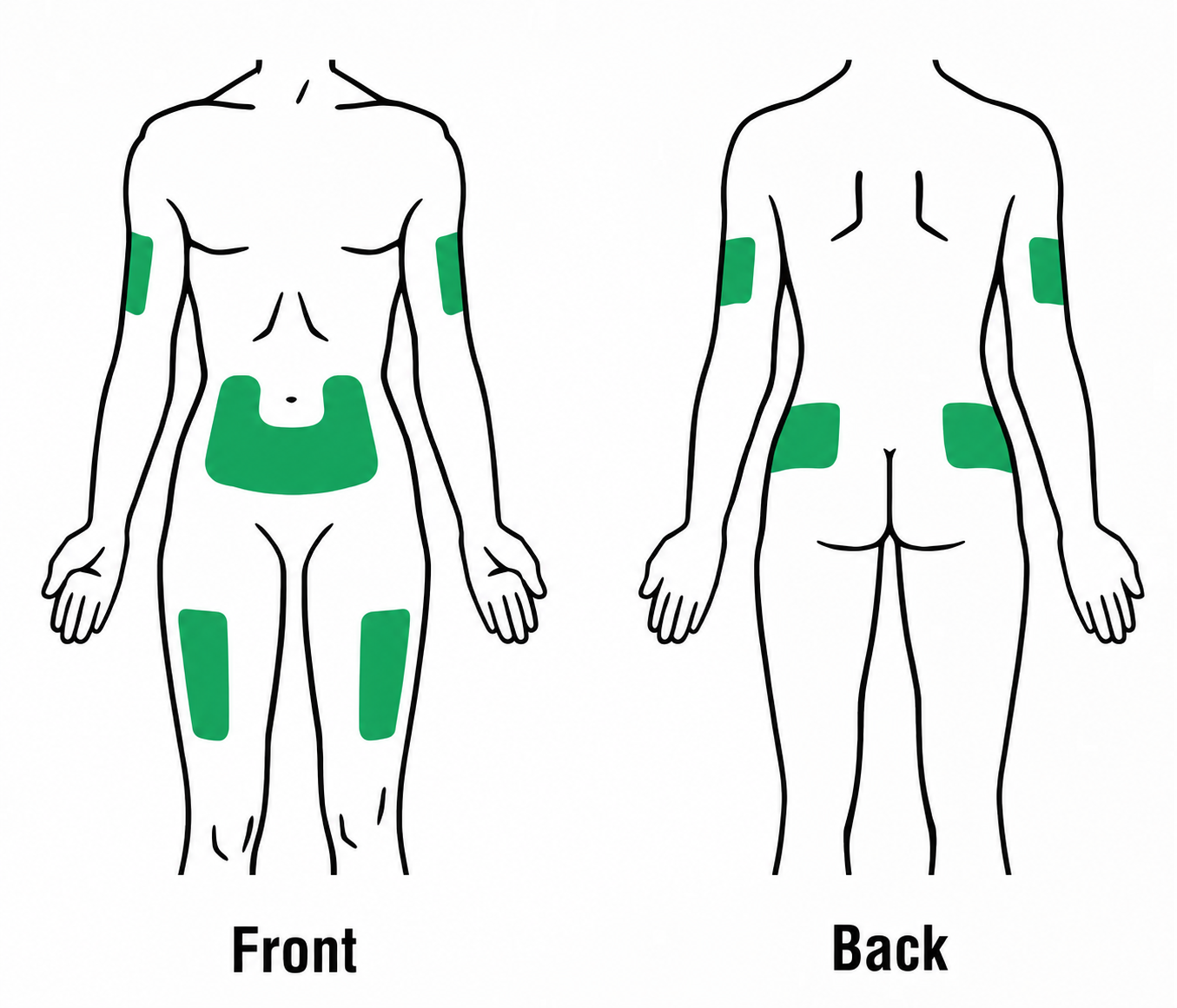
- 3Clean the site (abdomen 2 inches from navel, thigh, back of arm).
- 4Pinch the skin and insert at 45–90°.
- 5Push the plunger slowly and wait 5–10 seconds.
- 6Withdraw, dispose in a sharps container and return the vial to the fridge.
- 7Rotate sites.
07
Intramuscular injection
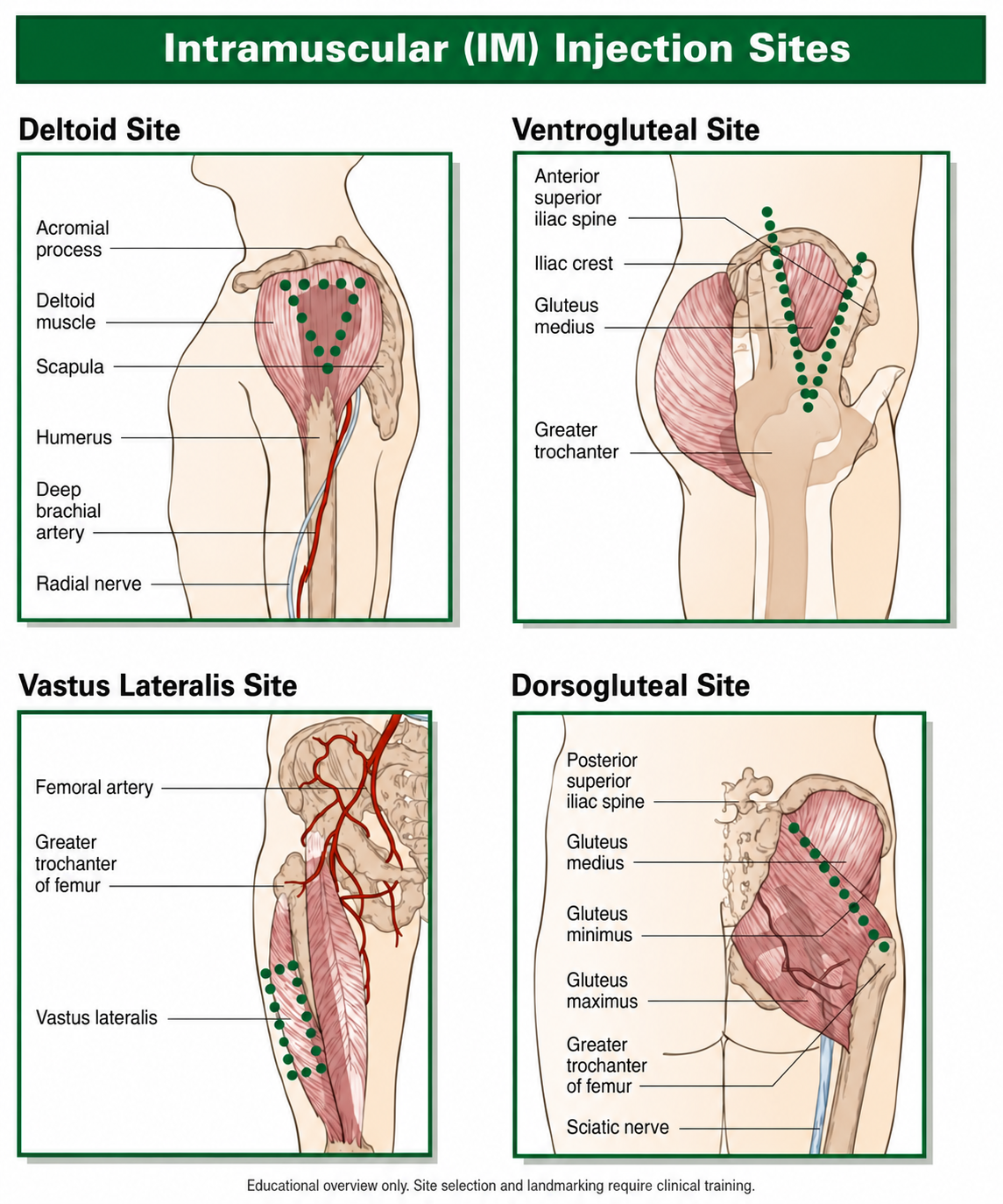
- 1Choose a site: deltoid, outer thigh or glute.
- 2Clean the site.
- 3Insert at 90° quickly into the muscle.
- 4Inject slowly.
- 5Wait a few seconds, then withdraw.
- 6Dispose of the syringe and refrigerate the vial.
08
Common mistakes
- Shaking the vial
- Injecting water directly onto the powder
- Reusing syringes
- Freezing a mixed vial
- Using sterile water instead of BAC water for multi-dose vials
- Miscounting units on a 1 mL syringe
FAQ
Adamantane & the blood–brain barrier
Chemically attaching an adamantane group to a peptide can increase its lipid (fat) solubility. Researchers hypothesize that this modification may help certain compounds cross the tightly regulated blood–brain barrier. The effect depends on the specific modified molecule; greater lipid solubility alone does not establish brain delivery or clinical benefit. This does not apply automatically to the unmodified peptide and is not a reconstitution additive.